Amazing 7-Ingredient Spaghetti Squash Pad Thai
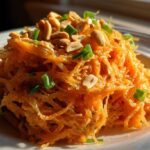
Create a delicious, low-carb Pad Thai using roasted spaghetti squash instead of traditional noodles. This recipe features a bright, flavorful peanut sauce, giving you that comforting Pad Thai experience in a healthier way. Jen and Alex invite you to share this flavorful journey!
- Prep Time: 15 minutes
- Cook Time: 40 minutes
- Total Time: 55 minutes
- Yield: 2 servings
- Category: Main Course
- Method: Roasting and Sautéing
- Cuisine: Thai-inspired
- Diet: Low Fat
Ingredients
Scale
- 1 medium spaghetti squash
- 2 tablespoons olive oil or avocado oil
- 1/4 cup creamy peanut butter
- 2 tablespoons soy sauce or tamari
- 1 tablespoon rice vinegar
- 1 tablespoon honey or maple syrup
- 1 teaspoon sriracha or chili garlic sauce (adjust to taste)
- 1 clove garlic, minced
- 1 teaspoon fresh ginger, grated
- 1/4 cup warm water (for thinning sauce)
- 1/2 cup chopped scallions, divided
- 1/4 cup chopped peanuts, for garnish
- Lime wedges, for serving
Instructions
- Preheat your oven to 400°F (200°C).
- Cut the spaghetti squash in half lengthwise. Scoop out the seeds.
- Brush the cut sides lightly with oil. Place the squash cut-side down on a baking sheet.
- Roast for 30 to 40 minutes, or until tender when pierced with a fork.
- Let the squash cool slightly. Scrape out the strands with a fork and set aside.
- While the squash roasts, whisk together the peanut butter, soy sauce, rice vinegar, sweetener, sriracha, garlic, and ginger in a small bowl.
- Gradually whisk in the warm water until the sauce reaches your desired consistency.
- In a large skillet or wok, heat the remaining oil over medium heat. Add half of the scallions and cook for one minute until fragrant.
- Add the spaghetti squash strands to the skillet. Toss gently to coat with the heat.
- Pour the peanut sauce over the squash. Toss everything together until the squash is evenly coated and heated through, about 2 to 3 minutes. Do not overcook.
- Remove from the heat. Stir in the remaining scallions.
- Serve immediately with chopped peanuts, a squeeze of fresh lime juice, and extra sriracha if you like more heat.
Notes
- Roasting time for the squash may vary based on its size.
- You can substitute tamari for soy sauce for a gluten-free option.
- Taste the sauce before adding it to the squash; adjust sweetness or spice as needed.
- This dish is best eaten immediately after preparation.
Nutrition
- Serving Size: 1 serving
- Calories: Approx. 450
- Sugar: Approx. 12g
- Sodium: Approx. 650mg
- Fat: Approx. 30g
- Saturated Fat: Approx. 5g
- Unsaturated Fat: To be determined
- Trans Fat: 0g
- Carbohydrates: Approx. 35g
- Fiber: Approx. 8g
- Protein: Approx. 15g
- Cholesterol: 0mg
Find it online: https://afripaket.com/spaghetti-squash-pad-thai-recipe/