

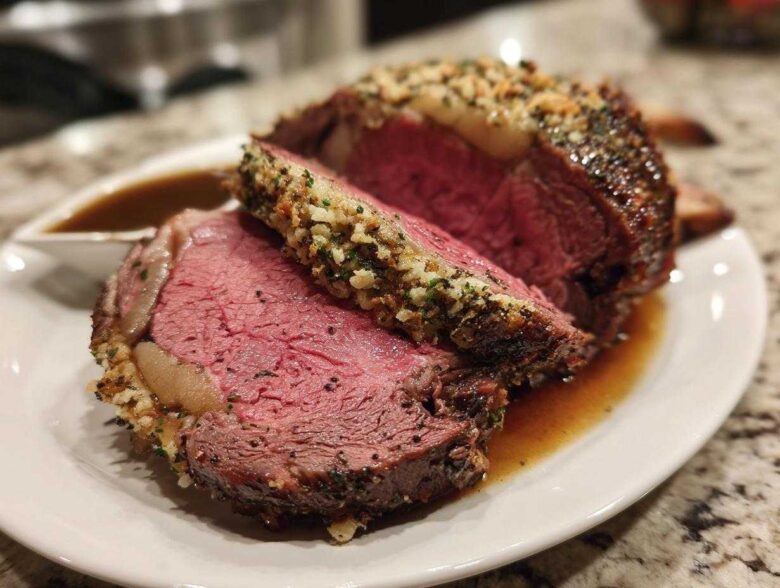
If you’re planning a holiday feast or just want to impress everyone at your table, nothing beats the showstopper status of a perfectly cooked roast beef. I used to be terrified of making prime rib. Seriously, the sheer size of that expensive cut made me sweat! But after years of trial and error, I landed on this ultimate foolproof oven-roasted prime rib method. Trust me when I say this technique guarantees a spectacularly juicy roast beef centerpiece every single time. Forget complicated smokers or pricey equipment; this easy method takes you straight to melt-in-your-mouth perfection!
Why This Easy Prime Rib Recipe Delivers a Showstopper Beef Dinner
What makes this easy prime rib recipe such a guaranteed success? It all comes down to respecting the meat and using temperature control like a pro. We start by letting the roast relax on the counter; bringing it up to room temperature prevents the outside from cooking way too fast while the inside stays cold. That initial blast of 450-degree heat creates this gorgeous, deeply flavorful crust, and then we back off the heat considerably.
It’s that temperature drop that ensures a truly juicy roast beef. Cooking low and slow after the sear locks in all those incredible juices. This method is actually so reliable that it turns out a magnificent showstopper beef dinner without all the guesswork you might think comes with cooking a big cut like this! If you want to check out some great side dishes for that big meal, I always suggest looking at the veggie stir fry options that pair surprisingly well!
Achieving the Perfect Prime Rib Temperature Every Time
You absolutely must, must, *must* use a reliable meat thermometer for this roast. Guessing is how you end up with dry beef, and we just won’t stand for that here! Getting the perfect prime rib temperature is the secret handshake to perfection.
We are aiming for 125°F for that gorgeous, slightly rosy medium-rare finish. If you like it a touch more done, pull it when it hits 130°F for medium. Remember, that temperature keeps climbing after it leaves the oven, so always pull it just before you hit your final target!
Ingredients for Your Ultimate Prime Rib with Garlic Herb Crust
Okay, let’s talk about what you need for this incredible main event. Because this is a straightforward, oven roasted prime rib method, we don’t need a giant laundry list of fussy ingredients. We want quality here, especially on the beef itself, which should be a lovely bone-in cut (5 to 7 pounds is perfect for my standard roasting pan).
You’ll need four tablespoons of that coarse kosher salt—don’t skimp on it!—along with pepper, dried thyme, and rosemary. Plus, look for that Dijon mustard, which acts like glue for our crust, and about six cloves of garlic, minced super fine. Oh, and if you want to see another recipe where I use those wonderful garlic butter flavors, check out my garlic butter steak bites!
- 1 (5-7 lb) bone-in prime rib roast, trimmed
- 4 tablespoons coarse kosher salt
- 2 tablespoons black pepper
- 1 tablespoon dried thyme
- 1 tablespoon dried rosemary
- 6 cloves garlic, minced
- 4 tablespoons olive oil
- 1 tablespoon Dijon mustard
- 1 cup beef broth (for au jus)
- 1 tablespoon cornstarch mixed with 2 tablespoons cold water (for slurry)
Preparing the Garlic Herb Prime Rib Crust
This is where the magic starts—creating that aromatic shell that locks in flavor! To build our famous garlic herb prime rib crust, you want to mix up your minced garlic, olive oil, Dijon mustard, thyme, and rosemary right alongside your salt and pepper. Don’t just dump it all in a bowl; use a little spoon and really mash those ingredients together until you have a thick, fragrant paste.
Now for my insider tip: that Dijon mustard isn’t just for flavor! It’s the perfect binder. After you’ve patted your roast totally dry—seriously, paper towels until it feels fuzzy!—rub the mustard onto the entire exterior first. This sticky layer makes sure every bit of that herbaceous crust grabs hold and stays put while it roasts. It sticks like glue, guaranteeing you get beautiful herb coverage across the whole roast!
If you want another recipe that utilizes these amazing herb and garlic combinations for a totally different meal, you have to check out my garlic butter steak bites post!
How to Cook Prime Rib: Step-by-Step Oven Roasted Prime Rib Guide
Alright, here is the method we stick to every time for our oven roasted prime rib. First things first: take that gorgeous hunk of beef out of the fridge at least two or three hours early! It has to get near room temperature, or else you’re fighting a battle your oven can’t win. Once it’s ready, crank that oven up high to 450°F. Brush on the herb paste we just mixed—nice and even all over.
When the oven is screaming hot, pop that roast in fat-side up on a rack in the roasting pan. Let it blast away at that high heat for just 15 minutes. This is essential for setting that crust we worked so hard on. After that quick blast, immediately drop the temperature way down to 325°F. Now, we wait and watch that thermometer!
The cooking time is usually about 13 to 15 minutes per pound at this lower temperature, but you cannot trust time—only the thermometer. Pull the roast when it’s about 5 degrees shy of your final goal. For a perfect medium-rare, that means yanking it out at 125°F. Don’t forget to check out my amazing beef bourguignon recipe for some hearty inspiration!
Crucial Timing for a Tender Standing Rib Roast
Listen to me: resting is perhaps the most important step in how to cook prime rib. Once you pull that beautiful, tender standing rib roast out, cover it loosely with foil and just walk away for twenty minutes, minimum. Seriously, don’t even poke it!
This resting period allows all those scorching hot, excited juices to redistribute back into the meat fibers instead of pouring out onto the cutting board the second you carve it. This resting guarantees that wonderful, melt in your mouth roast texture you’re looking for.
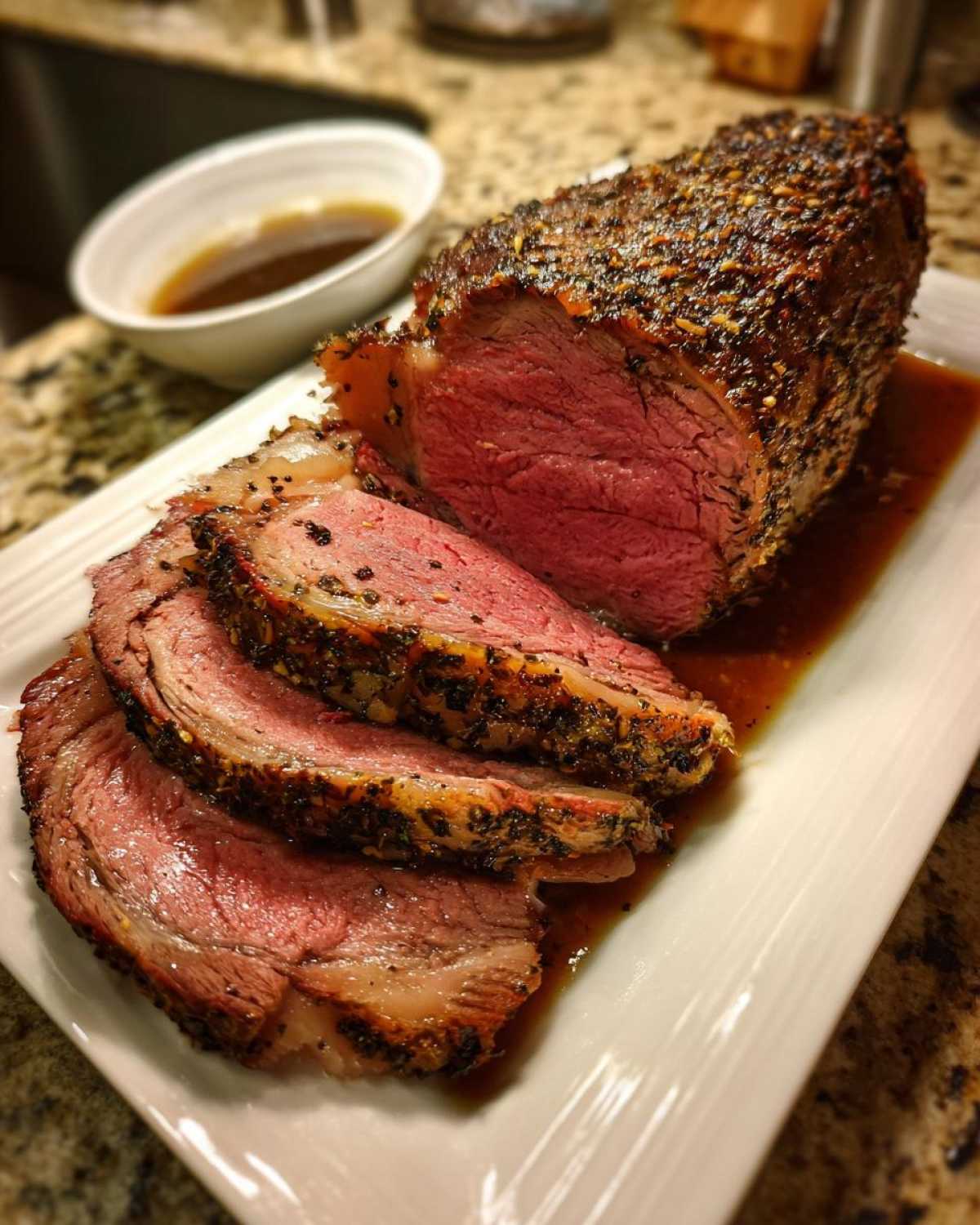
Making Simple Prime Rib with Au Jus
Now that we have our amazing roast resting peacefully—and trust me, don’t rush that part!—it’s time to make the accompanying liquid gold! We’re keeping it simple because honestly, the drippings from this roast are already the most flavorful thing on earth. You don’t need canned gravy; you just need to capture what’s already in that roasting pan!
Place that roasting pan right over a burner on your stovetop over medium heat. Take a wooden spoon and just scrape up all those wonderful browned, crusty bits stuck to the bottom. That’s pure flavor! Pour in your beef broth and bring everything to a nice simmer. To thicken it just enough for a proper prime rib with au jus that coats the meat beautifully, whisk in that cornstarch slurry until it thickens slightly.
It should look glossy and rich, not gloppy. If you’re looking for a fantastic, rich stew recipe to compare it to later, check out my beef bourguignon post for more in-depth sauce techniques!
Tips for Success with Your Prime Rib Roast
Even though this is my ultimate prime rib guide, sometimes you get a roast that’s a bit bigger or smaller than expected, or maybe you just prefer a super gentle cook. If you’re nervous about that initial high-heat blast, I totally get it!
You can try the low-and-slow alternative I mentioned in the notes. Instead of starting at 450°F, you can begin your oven at a very gentle 250°F. Let the roast cook slowly until the thermometer reads about 10 degrees *under* your final target. Then, crank the heat up to 450°F for those last 10 to 15 minutes—just enough time to crisp up that glorious garlic herb crust.
It’s a slightly different path, but you still end up with incredible, juicy results. It’s just about finding the cooking rhythm that makes *you* feel confident about that big expensive cut! Need a side dish inspiration for that roast? You should check out my directions for those amazing garlic butter steak bites for another dinner idea!
Serving Suggestions for Your Juicy Roast Beef Centerpiece
Now that you’ve created this magnificent, juicy roast beef, you need sides that can stand up to it! Think rich, comforting accompaniments that soak up all that incredible au jus. You want simple things that let this roast shine as the holiday roast beef centerpiece it is.
My absolute favorites are creamy mashed potatoes—I use a recipe that is out of this world rich—paired with something green and slightly acidic, like simple roasted asparagus or sautéed green beans with almonds. If you want the ultimate side dish pairing, you have to try my loaded mashed potato casserole recipe. It makes the whole plate look like a five-star meal!
Storage and Reheating Instructions for Leftover Prime Rib
First off, I hope you have leftovers, but if you do, storing them right is key to keeping that beef tender! Once the roast has completely cooled, the best way to store slices is thinly cut—thick slices reheat unevenly. Pop those slices into an airtight container.
Don’t just store the meat dry, though! Pour a little bit of that leftover au jus, or even just some quality beef broth, over the slices before you seal the container. This keeps the meat moist in the fridge for about three or four days. When you reheat, use a low and slow method: gently warm the slices in a covered pan over low heat, adding more broth as needed so they steam, not fry. That’s the trick to keeping them nearly as good as the first night!
Frequently Asked Questions About Cooking Prime Rib
I know when you’re committing to a big prime rib, you end up with a million little worries about messing it up! Don’t stress; these are all questions I had myself when I was first learning this simple prime rib method. Here are the big ones I always get asked:
Can I use a boneless prime rib roast instead?
Absolutely, you can! Using a boneless roast means you don’t have that crucial bone acting as an insulator, so the roast cooks through a little faster than a bone-in version. If you swap, just keep a very close eye on your temperature readings. I’d suggest checking it about 10 minutes sooner than the time chart suggests. But hey, you still get that amazing herb crust and a wonderful, tender standing rib roast!
What is the best beef roast recipe if I don’t want to use garlic?
If garlic isn’t your thing, or maybe you have a guest who can’t have it, don’t worry! You can still create a fantastic crust. For a variation of my best beef roast recipe, just skip the garlic entirely. Instead, double the rosemary and thyme, and add about a teaspoon of nice sweet onion powder to your mix. You can also use smoked paprika for a little color and depth. Honestly, any high-quality, flavorful mixture rubbed aggressively works wonders on this cut!
If you’re looking for some other ideas on side dishes that pair well with any kind of beef roast, you should check out my tips on making the ultimate veggie stir fry! Sometimes a lighter side balances out the richness perfectly.
PrintUltimate Oven-Roasted Prime Rib with Garlic Herb Crust
A straightforward method for cooking a tender, juicy prime rib roast with a flavorful garlic and herb crust, perfect for a holiday centerpiece.
- Prep Time: 20 min
- Cook Time: 150 min
- Total Time: 170 min
- Yield: 8 servings
- Category: Main Course
- Method: Oven Roasting
- Cuisine: American
- Diet: Low Fat
Ingredients
- 1 (5-7 lb) bone-in prime rib roast, trimmed
- 4 tablespoons coarse kosher salt
- 2 tablespoons black pepper
- 1 tablespoon dried thyme
- 1 tablespoon dried rosemary
- 6 cloves garlic, minced
- 4 tablespoons olive oil
- 1 tablespoon Dijon mustard
- 1 cup beef broth (for au jus)
- 1 tablespoon cornstarch mixed with 2 tablespoons cold water (for slurry)
Instructions
- Remove the prime rib from the refrigerator 2-3 hours before cooking to allow it to come to room temperature.
- Preheat your oven to 450°F (232°C).
- In a small bowl, combine the minced garlic, olive oil, Dijon mustard, thyme, rosemary, salt, and pepper to create the herb paste.
- Pat the roast dry thoroughly with paper towels. Rub the herb paste evenly over the entire surface of the roast.
- Place the roast, fat-side up, on a rack in a sturdy roasting pan.
- Roast at 450°F (232°C) for 15 minutes.
- Reduce the oven temperature to 325°F (163°C). Continue roasting until the internal temperature reaches your desired doneness (see notes for temperatures). This usually takes about 13-15 minutes per pound.
- Remove the roast from the oven when it is 5°F below your target temperature. Tent loosely with foil and let it rest for at least 20 minutes before carving.
- To make the au jus, place the roasting pan over medium heat on the stovetop. Scrape up any browned bits from the bottom of the pan. Add the beef broth and bring to a simmer, stirring well.
- Whisk the cornstarch slurry into the simmering liquid until the au jus thickens slightly. Serve hot alongside the carved roast.
Notes
- For medium-rare (recommended), pull the roast when the internal temperature reads 125°F (52°C). The temperature will rise to 130°F (54°C) during resting.
- For medium, pull at 130°F (54°C) to finish at 135°F (57°C).
- If you prefer to cook low and slow, start the oven at 250°F (121°C) until the roast is about 10°F below your target, then raise the heat to 450°F (232°C) for the last 15 minutes to crisp the crust.
Nutrition
- Serving Size: 6 oz cooked
- Calories: 450
- Sugar: 1
- Sodium: 750
- Fat: 30
- Saturated Fat: 12
- Unsaturated Fat: 18
- Trans Fat: 0
- Carbohydrates: 2
- Fiber: 0
- Protein: 40
- Cholesterol: 130